Showing posts with label Campaign Settings. Show all posts

Sunday, February 27, 2022

[Dwarf-Land] A New Campaign set in Dwarf-Land

Some years back, Scott Driver of the long lost and lamented blog, Huge Ruined Pile, created the campaign setting of Dwarf-Land for an OD&D campaign. Scott even had the amazing artist Russ Nicholson make a beautiful map of Dwarf-Land for him, which he shared with the world at large.

At some point he mentioned that he had originally drawn the map on a sheet of Judges Guild hex paper. I inquired if an electronic copy of the map was available, and Scott actually sent me his original hand-drawn map! He mailed it to me five years ago this month. He told me I could do whatever I wanted with it, as long as I did not charge for anything developed therefrom. 

Sadly, I did not realize that this was indicative of his once again disappearing from the Internet, which he did shortly thereafter. He is definitely missed.

Other things intervened, life went on, and the map remained ensconced in its envelope, wedged among my Old School books on my gaming shelves.

A short time ago, I recalled the map, and that I had scanned it some years ago. Having completed the Isle of Eldisor, I soon began itching to draw another map in Hexographer. I went through my Campaign Files, and discovered a file named "Dwarfland." Therein I found the scan I had made of the map five years ago.

Here is the Dwarf-Land map that I created from the original scan. I cannot extend further rights, as my agreement did not include that, but use it and the campaign material below for your own campaigns howsoever you might desire. 

The campaign material is developed from a file I found with the map in the folder; I hope it was all materials from Scott; I know others contributed to the work before it all disappeared from the Internet. I took it and ran with it, changed it and altered it to fit the needs of an upcoming Labyrinth Lord campaign.

Enjoy!
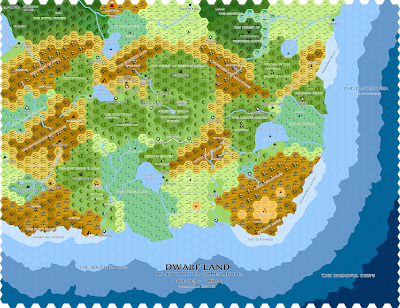
Dwarf-Land Map
Click to Embiggen

DWARF-LAND

On a crag in the shadow of the Eldritch Alps lies enchanted Castle Blitzendrang, the glimmering fortress of King Flim IV, King of All Dwarrowkin, High-King of Dwarf-Land. The castle and its surrounding cottages, fields, furrows, and groves are the haunts of the Dwarrowkin – Dwarves and Gnomes – who see to their business and industry in shadowed fairy-taverns and misty lamplit streets untrod by Men, braving the perilous environs of the surrounding valleys and highlands seeking to reclaim ancient delvings, mines of gold and jewels, and the lost Donnerhammer of the Old Kings.

Dwarf-Land is the homeland, as one might surmise, of the namesake Dwarves and their close cousins the Gnomes, collectively known as the Dwarrowkin, those unearthly folk perhaps closest to Men in earthly sensibilities. There are enclaves of wilder, more distant kin in the region. Alfkin – Elves and Halflings – lurk in a few fairy-fortresses in the northwest, the border-lords of Elf-Land. Faeries of goodly and unkind sort haunt glittering vales and dark meadows. Goblins have raided and settled from Goblin-Land to the west, and Orcs have invaded and settled from Orc-Land to the north. And of course, any played-out mine, ruined settlement, or abandoned stronghold quickly becomes the province of malign Kobolds, Gnolls, Ogres, Trolls, Dragons, or even Giants!

Here is what every inhabitant of Dwarf-Land knows about the peoples and places of the realm, even if they are the rudest of rubes or hickest of hayseeds:

1. The Dwarrowkin rule Dwarf-Land, as the name implies, though their numbers have greatly decreased since even before the coming of Men. Many of their delvings have been abandoned or reduced to ruins, and now most of the Dwarves have retreated to Dwarf-Town or the northern hold of Plugh. Their cousins, the Gnomes, are not much better off; the largest contingent of Gnomes is now found in Gnome Knolls. Dwarves and Gnomes are also found in the settlements of the Valefolk, especially in Cormorant and the towns of the Gnildavales. The High-King of Dwarf-Land is King Flim IV, King of All Dwarrowkin, wearer of the Adamantine Crown. The High-King’s wife is the Elf-Queen Auturne, who he married after the death of his first wife many years ago. The High-King has two heirs, Crown Prince Flam, his son from his first marriage, and Gnome-Prince Xerxy, his son by Auturne. Xerxy is styled “the Black Prince” a name that many say reflects his machinations, desires, and soul.

2. The Alfkin dwell mostly in Elf-Land, to the northwest. The rulers, leaders, and artisans are Alfar-Elves – willowy and attractive in an eldritch sort of way. They can be foppish and pleasure seeking, though often truculent and savage when roused to anger. Another type of Elf, the Petty Elf (i.e., Halflings) constitute the merchants, yeomanry, and peasantry of Elf-Land and are generally sensible, fond of pipeweed, fine ales, gardening, and baking. The only major settlements of the Alfkin in Dwarf-Land are Elf-Town and the towers of Drasmeth and Hexid in the Joyful Forest. Wandering bands of Elves can be found in the forests of Dwarf-Land, while many Halflings have settled among the Valefolk. The Alf-Earl Gandalf rules the Joyful Forest; he holds it in fief from the High-King of Elf-Land, Elbegast, King of All Alfkin, and pays tribute to the High-King of Dwarf-Land, King Flim IV.

3. Men are generally of three types – the savage Pechs, the honorable Valefolk, and the decadent and depraved Zorgs.

The Elder Race of Men remains bestial and live among the animals and monsters of forest and marsh. The Pechs as they are known to the Dwarrowkin, or Picts as they are called by Men, are a brutish, savage people who are mostly found in the Ever-Glooms, the Hoobmuck, and the Woods of the Great God Pan, though they can be found in just about any wild wasteland. The atavistic Picts live in tribes and clans, settled in small mud-hut villages and hamlets surrounded by wooden palisades, and guarded by their pet animals and monsters. They work only with wood, bone, and stone, but sometimes use looted weapons and armor. They are short and squat; have slate-gray to bark-brown skin; black hair; and brown eyes under thick brows. Their tongue is as the screeching and cackling of beasts. They cover themselves in paint when hunting, at war, or seeking revenge. They are led by an order of wicked Druids who summon their monstrous allies to feast upon living sacrifices for their bestial gods – Jhebbal-Sag the Lord of Beasts and his servants, Dagon of the Waters, Hanuman the Ape, Tsathoggua the Toad, Yezud the Spider, Yhoundeh the Elk-Goddess, and Yog the Bat, among others. They are head-hunters, and their faith requires cannibalism.

The Middle Race of Men, the Sons of Lif and Daughters of Lifthrasir, more simply known as the Valefolk, originated in and mostly dwell in the Kudzu Forest and the towns and villages of the Gnildavales. Allies and subjects of the Dwarves, they are held in respect as they honor the Old Ways, and produce a disproportionate number of virtuous rustics, shining knights, kindly wizards, and grinning rogues. They are of average height and build; have pale to ruddy skin; brown, blonde, or auburn hair; and blue or green eyes. Each town of Valefolk sort has its own primary pantheon of Gods – Mitra of Cormorant, the Aesir of Darkdurdle, the Ennead of Sawbleed, the Olympians of Orlock, and the Tuatha of Rursliv. Cormorant is their largest and most cosmopolitan town; Cormorant is, in fact, the largest and most cosmopolitan town of all of Dwarf-Land. Many of the Woodsfolk of Kudzu (taller and more muscular, with dark brown hair and ruddy red skin) are of Druidical sort, of a kindlier branch of that faith, though they have their darker gods as well, such as the warrior-god, Crom of the Mountain. A tribe of Woodsfolk has settled in the Drudwas Wood, centered on the Tower of Gludif.

The Younger Race of Men are the Men of Zorg. They are a newer arrival, first arriving from Across the Dreadful Deeps some centuries ago. A decadent and depraved people, their strongholds dot the wilder places of the land, especially in the south. The Zorgs are notorious demon-worshippers, necromancers, and black magicians. Their bloodlines are tainted by otherworldly dalliances with abyssal patrons and the dead; centuries of such congress have produced a race of languid sybarites capable of any abomination or outrage, from ritual cannibalism to obscenities further beyond the pale. They are tall and thin; have pale, almost albino skin; hair in bright colors (blue, green, purple, red, yellow, etc.); and their eyes are orange, pink, or red. However, some say that this appearance is merely a fiendish glamour for many, especially nobles and sorcerers, and their true appearance is far more demonic. They are tattooed and/or ritually scarred and wear many piercings. In battle, the Zorgs are formidable; their sorcerers are fearsome. Their knights ride black chargers and wear black lacquered armor; their necromancers are accompanied by ranks of undead. Their major settlements include Malifer, Isp, Glumen, Nilmerg, Pletra, Threen, Undrac, and Ulv, and their environs; they are found in minorities in Flonkerton and Cormorant; and are also found in smaller numbers in the Gnildavales.

A fourth Mannish “race” is that of the Amazons, the She-Devils of the Smaragdines. Founded centuries ago, by a strange alliance of Valefolk and Zorgish women who sought to live apart from men, i.e., the males of their type, for they had had enough of the rule of patriarchs. Founded by the Deified Warrior-Priestess Termagant, the Amazons numbers quickly grew as word of the freedoms they offered members of their sisterhood spread. A great battle was fought – the Battle of Shackles & Keys – the only time Valefolk ever allied with the Zorgs, much to their shame. The Amazons prevailed and won their freedom. Today they live in small villages and hamlets in the Smaragdine Mountains, Harridan Hills, and Glistening Glades, though they can be found settled elsewhere in the wilds. They worship a trinity of goddesses – Termagant, their Warrior-Queen (at Termagant); Hecate, the Witch-Queen (at the Fearful Fane); and Freya, the Matriarch-Queen (at the Peerless Pagoda). Amazons are often found in the wider world, as they form mercenary companies and help men and others fight their wars – provided they never have to fight other Amazons and get to kill plenty of men. It is while they are out “on patrol” with their company that they seek prospective mates. They return home to bear their children; girl children are kept, while male children are given over to others or sometimes exposed to the elements. Amazons are tall and athletic; have tan or bronzed skin; blonde, red, or brunette hair; and green, blue, or purple eyes. Contrary to popular myths Amazons do not eschew heavy armor, though most are light warriors (leather or chain); and some play the part of the myths and legends when they have strong magical protections.

4. The Orcs of Orc-Land to the north are said to be descended from corrupted Elves; they are as foul in their own way as the Elves are fair, and their tongue, though vile upon the ear, is certainly related to Elvish. They are divided into many different Orc Tribes – the Black Hands, White Skulls, Burning Eyes, Red Claws, Blue Blades, etc., and the different tribes hate each other as much as they hate all other peoples (though they save their worst hatred for Elves). Most leaders of the tribes in the region are Half-Orcs, or Uruks, descended in a long line from old alliances with the early Zorg settlers. They worship strange and terrible demons. Three major Orc domains are found in the region – the Black Hand Boar-Rider Orcs of Nacht-Mog, who ride giant boars and rule the Plain of Beastly Bones; the White Skull Sea-Orcs of Tarka, whose black-sailed pirates raid the Zorg traders and coasts; and the Burning Eye High-Orcs of Xyzzy, steeped in the ancient sorcerous power native to the Cabal Mountains. Many other lesser tribes, clans, and bands can be found throughout Dwarf-Land.

5. The Goblins of Goblin-Land to the west are said to be descended from corrupted Dwarves; they take the form of scrawny Dwarves with disproportionate and bestial features; strange and unnatural skin, hair, and eye colors; and can never, ever grow a true beard. They are found in three sizes – small Goblins, man-sized Hobgoblins (of Orcish blood), and large Bugbears (descended from less discriminatory couplings with larger beasts). They are divided into many different Goblin Hordes, each ruled by a Goblin-King. They hate all other peoples but reserve their greatest hatred for Dwarrowkin. Most leaders of the tribes in the region are Goblin-Men, descended in a long line from old alliances with Pechs. They worship wicked spirits, and it is said that some follow Jhebbal-Sag. Goblins infest the western wilds of Dwarf-Land – they practically rule the Smaragdine Mountains (save for the lands held by the Amazons), the Peaks of Peril, Phalkwood, and all points west. Their major settlements are Blix, hold of the Catoblepas Horde under the rule of Goblin-King Vipertongue; Gorlab, hold of the Axebeak Horde under the rule of Goblin-King Toadsquat; Castle Deathcap, hold of the Hag-Son Horde under the rule of Goblin-Queen One-Eye Olga; and the Free Village of Flonkerton on Limpet Lake, where they live in relative peace with a wide mix of races. Many other lesser hordes, clans, and bands can be found throughout Dwarf-Land.

Monday, November 29, 2021

What if Mystara were a Dying Earth-style Campaign Setting?

Mystara is in many ways a “kitchen sink” campaign setting – it has something of everything in it, from many different genres and many different styles. But what if the overall style was one much more of the Dying Earth style, as per Jack Vance’s Dying Earth, Clark Ashton Smith’s Zothique, or Lin Carter’s Gondwane stories?

Basic Assumptions
1) Take the basic information as presented in the Gazetteers in the broad though not necessarily in the specific.

2) Countries are not “countries” so much as “cultural regions,” as nations, state, and empires are weak and ineffectual, for the most part, in the Dying Earth stories. “Ylaruam” is a region, and the “Sultan” of Ylaruam is a hollow title; so too the “Emperor” of Thyatis, and so forth. Everything is local.

3) The cultures of the “cultural regions” are the last, age-old remnants of ancient peoples, each of whom once had its great height of imperial power. These remnants are found scattered throughout the Known World. There are remnants of the “Alasiyani Empire” scattered from far western Darokin through to the Northern Reaches, and south to Ierendi.

4) Throw the timeline out the window. Blackmoor was an utterly ancient empire of an unknown age in the forgotten past. Even the order of the empires of the remaining cultures are unknown, save for the Thyatian, which was the last great expansive culture, the last hurrah so to speak of an offshoot of the Alphatian culture which was the height of Wizardry in the recent eons. More high-tech remnants like that of Blackmoor scattered here and there, as each culture delved deep into those technomantic mysteries and sought to rebuild the greatness that was Blackmoor – before the Arcane Inquisitors of Alphatia sought to purge them from the memory of the world.

5) There are no proper large-scale religions; all worship of immortals is local, like everything else, at best regional. There are far more dead and forgotten immortals than there are living ones. There are few region-spanning religious organizations; such are the exception to the rule. Temples of the same immortal in neighboring cities might not even be aware of each other, and if they are, might ignore each other or even be enemies.

6) Life of the commons through to the royals is one of decadence and often debauchery, all to stave off the ennui of the pointlessness of existence – after all, the moon might fall tomorrow, or the sun might fade away, or the stars blow out. The adventurers and others of their ilk are the exceptions to the general rule, trying to do something that makes a difference, that makes a mark, that makes advancement when all is in extreme retrograde at the nadir of history.

7) Populations are drastically different. Cities have no more than half the population listed, living amidst ruins of cities twice the size listed. The same for towns. Villages are mostly the same. But importantly, what is on the maps is all there is, settlement-wise. There are perhaps a handful of hamlets here and there, and homesteads, especially close to the larger settlements, but no more settlements of village size or greater, nor strongholds. What you see is what there is. There are, however, tons of ruins scattered about. Most empty, some occupied by monsters or stragglers.

8) Monsters are even greater in numbers. Realms where they dominate, such as in the Broken Lands and Dwarfgate Mountains, are true holds of the Darkness. Most monsters are outgrowths of the growing darkness – a la William Hope Hodgson’s The Night Land. The Darkness both terrorizes and yet also beckons – join us before it is too late! Become one with the Night before the Final Twilight!

9) Demi-humans are even more caricatured versions of themselves. Dwarves are near mythical – Rockhome is entirely underground, only ruins above, as the dwarves seek sanctuary from the death of the sun in the geothermal depths. Those on the surface are exiles, adventurers, or madmen. Elves live for debauchery – Alfheim is one vast party, for the elves now have nowhere to flee at the end of time itself, and they know their Final Doom is upon them. Halflings are macho barbarians holding their Shires against all comers – if the moon falls into the Shires, they will do their damndest to Shout it back into the sky!

10) Lands outside the Known World are mythical at best; only legends remain. Alphatia sank, or flew off into the sky, or is hidden behind a magical veil – no one knows. The Isle of Dawn is reachable, at great dangers, but the ancient colonies are all returned to savagery, save for the strange and mysterious Thothians. Norwold is a cold, glacier-haunted ruin where big hairy men fight and eat and are eaten by big hairy monsters and dragons. Sind is a name out of the West; only monsters and stranger things come out of the West. And the sea of Dread is truly to be dreaded, for south of Ierendi and Minrothad it has been claimed by the Darkness.
 
Cultural Regions – Some Initial Ideas
1) Karameikos: The Darkness-ridden land of Karameikos is of ancient and mysterious sort; the forests are home to vampires and werewolves and other creatures of the Falling Night. A hundred years ago, in their last spasm of Empire before falling into squabbling city-states, the Empire of Thyatis sought to push back the Darkness, and invaded Ancient Traladara – and were overwhelmed. Stefan and his co-religionists – followers of Vanya, She Who Would Conquer the Night – sought to re-invigorate the invasion 30 years ago. Their little points of light in the Darkness are laughable on the grand stage. The Traladarans continue on as they have since time immemorial, though a few have joined in the madness of these new Karameikans. Their religion is such that it is divided between those who would placate the Darkness, and those who would embrace it…

2) Ylaruam: The vast Alasiyan desert holds inky blots of Darkness at night to rival those of the Sea of Dread. In the howling wastes, one can find ruins ancient beyond memory, uncovered by the stinging sands driven by the Night Winds. There, creatures from the Outer Dark come to be worshipped by madmen and strange cultists. The cities in between are brightly lit to keep out the Night, even by day; and while the men in the bazaar must needs trade with the nomads, they know not who or what is hidden behind the nomad’s veils…

3) Glantri: Here have come the arcane scions of a dozen realms and even outer worlds. Here they find a strange arcane power they hope to keep the Darkness at bay. But each has brought with them the taint of their own fallen, decadent, debauched cultures, each has brought within themselves and their peoples the touch of Night from elsewhere. Lesser men despair, for in this land, to live within the light of a wizard’s tower is as dangerous to the soul as to live outside in the Darkness…

Saturday, April 4, 2020

Middle-Southlands Map

Seems I am on a map-making tear rather than a campaign-development tear.

Reading through the OD&D boxed set and the B/X books of late, combined with several recent requests for the Hexographer file for my old Southands map, caused me to return to that map and see what more I could do with it.

So I thought to myself, "Self, what would 13-year old you do with this material and Hexographer?"

And so I present to you a map of "Middle-Southland," combining the Outdoor Survival map with OD&D, B/X, and a few other choice bits of D&D, with Middle-earth (and a dash of Shannara, I suppose), as I probably would have drawn back when I first read through Lord of the Rings and the Silmarillion.

Grab a copy of the map, pull out your OD&D box or B/X (or Labyrinth Lord) books, and get together online with your buddies, and let your 13-year old selves do some exploration...

Click to embiggen

If you want a larger PNG of the map, or a copy of the Hexographer file, just email me at jamesmishler@gmail.com

Stay Home! Stay Safe!

Enjoy!

Tuesday, January 1, 2019

[LEGENDARIA] New Labyrinth Lord Campaign Setting in Development

This is the first in a series of posts dedicated to building a library of races, classes, spells, magic items, technological devices, and various charts and tables dedicated to building and exploring a new LABYRINTH LORD campaign setting – LEGENDARIA.
 
Or rather I should say, an old campaign setting, as LEGENDARIA has been brewing in my head now for years. LEGENDARIA is a world inspired by and steeped in the concepts and themes of a certain selection of 1980s cartoons. The primary inspirations for LEGENDARIA can be found among the following cartoons (those with multiple asterisks being the most influential):
 
Thundarr the Barbarian* (Ruby-Spears, 1980-81)
Blackstar*** (Filmation, 1981)
Dungeons & Dragons** (Marvel, 1983-85)
He-Man and the Masters of the Universe*** (Filmation, 1983-85)
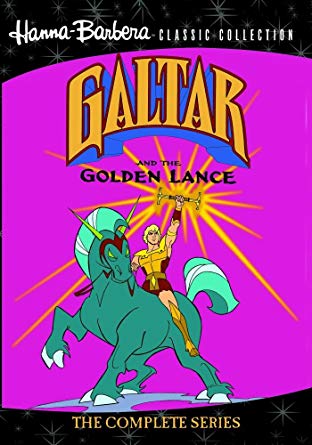
Galtar and the Golden Lance* (Hanna-Barbera, 1985-86)
Thundercats** (Rankin-Bass, 1985-86)
 
Those of you familiar with these programs can see where I am going with this, I am sure. Note that everything outlined below is subject to change as things develop; I am not going to pigeonhole myself on the development of this campaign.
 
The basic concept of LEGENDARIA is that it is a backwater planet in the far-flung future when both magic and technology flourish, but in a time when most of the planet and the nearby systems are stuck in a neo-medieval age a thousand years after a major pyrrhic interstellar war. Unknown to all but a few, ancient secrets of magical and technological power are hidden amidst the ruins of LEGENDARIA, artifacts of such might that whomever possesses them has the power to conquer galaxies and form the next Intergalactic Empire!
 
HISTORY – Untold ages ago, humanity and terrestrial biota spread out from Earth and the Solar System – which are long-since lost, though figure great in ancient legends. Interstellar and intergalactic civilizations, human and otherwise, have swept back and forth across the galaxies for untold ages. A thousand years ago the LAST GALACTIC EMPIRE fell in a terrible war against the LORDS OF THE VOID – servants of the DEMONS OF THE OUTER DARK. The Lords of the Void succeeded in destroying the Galactic Empire, but were themselves essentially destroyed, though some survivors hid to lick their wounds and perhaps rise again…
 
Today LEGENDARIA is home to a patchwork of tiny city-state-sized kingdoms in between which are wide swaths of savage wilderness. Here and there can be found small villages and hamlets, petty lords and robber barons. These realms are ruled by Heroes and Villains who wield ancient technological artifacts of super-science in one hand, even as the other hand wields a primitive blade or shield.
 
The scale of the campaign is small – five miles per hex – and geography changes dramatically and quickly, though most regions are separated by bands of rugged and dusty broken lands. Here and there can be found an atomic wasteland. Most ruins are stone ruins from previous neo-medieval realms rather than the twisted metal and glass of advanced and futuristic states. The entire campaign should be able to take place on nine maps, three by three, not counting the odd trip to other planets or dimensions.
 
RACES – there are many, many more races on LEGENDARIA than even on your typical fantasy world:
 
TRUE HUMANS are a small but significant minority and are further divided into countless cultures and ethnicities.
 
DEMI-HUMANS include elves, dwarves, gnomes, halflings, and other trans-human races, such as near-men, cat-folk, changelings, amazons, wolf-folk, and so forth, all descended directly from humans, though perhaps with a bit of animal or even alien DNA.
 
MANIMALS are descended from animals uplifted by technology; examples include ape-kin, goat-kin, sheep-kin, cat-kin, wolf-kin, bear-kin, and so forth.
 
GOBLINOIDS are descended from humans, demi-humans, and manimals corrupted by magic; examples include kobolds, goblins, orcs, hobgoblins, gnolls, bugbears, and so forth.
 
MUTANTS are descended from humans, demi-humans, manimals, goblinoids, and animals randomly mutated by radiation. There are stable mutant races as well as mutants of unique sort.
 
Together, the Manimals, Goblinoids, and Mutants are considered “HUMANOIDS.” Some human groups label all humanoids (and even demi-humans) as “SUB-HUMANS” or “ABHUMANS,” fit only for slavery or extermination.
 
For example, in some places the distinction between cat-folk (demi-humans) and cat-kin (manimals) is meaningless; in others, it can mean the difference between freedom and slavery.
 
ROBODROIDS include sophont (intelligent, self-aware) robots, androids, synthetics, AI vehicles, and the like.
 
ALIENS are beings from the PRIME PLANE but descended from a planetary biota not originally native to Lost Earth.
 
DEMONS are beings from or descended from beings from other dimensions, whether from Chaotic, Lawful, or Neutral realms; even Lawful Demons are utterly alien and often inimical to the lifeforms of the Prime Plane. Demons include GENIES, ELEMENTALS, and other like creatures that are native to other dimensions.
 
Most settlements are of a singular race, with perhaps a sprinkling of other nearby allied races, but there are a handful of settlements in each region that are more cosmopolitan.
 
CLASSES – I am taking a new tack on classes:
 
20th level is the highest level attainable, with most of the greatest lords, heroes, and villains being between 12th and 15th level. The campaign is a bildungsroman; player characters do not begin play as the great heroes (or villains) of the campaign but can become such through hard work and luck.
 
Levels 1-3 are Veterans, 4-7 are Heroes/Villains, 8-11 are Super-Heroes/Villains, 12-15 are Legendary Heroes/Villains; and 16+ are Mythic Heroes/Villains. The vast majority of the populace are 0-level “Normal Men/Women,” and thus to them, even a 1st level player character is of “heroic” stature.
 
There are race classes, and all non-humans must take their racial class; and all non-human races have level limits in their racial class (generally 8th to 12th). However, player characters of non-human race (and select NPC heroes and villains) can multi-class their racial class with other classes, and they are not limited in level in their racial or non-racial class (all XP charts continue to 20th level).
 
Humans can also multi-class. There will be special rules for multi-classing.
 
There are the four core classes – Cleric, Fighter, Magic-user, and Thief. Each of these have sub-classes, in the classic OD&D tradition of the paladin class or the BECMI Companion rules (i.e., if certain requirements are met, the character can join one of the sub-classes). A player character can begin play at 1st level with a sub-class or can wait until 3rd level to join a sub-class.
 
Riffing off of the classic Hero at 4th level and Super-hero at 8th level, 1st level as well as every level divisible by four has something special associated with the sub-class. This follows more in the vein of developments that might have occurred had the Mentzer Companion rules further expanded on the development of sub-classes, rather than the class kits of 2E or the character-build philosophy explicit in the design of 3E and implicit in 5E.
 
CLERICS are much more strongly flavored, and gain spells and other abilities, based on the god(s) they worship. Crusaders of the Star Gods do not have the same spells and abilities as the Cultists of the Demons of the Outer Dark; the Priests of the Mother of Life differ greatly from the Druids of the Elemental Lords and are even more at variance from the Scientist-Priests of Technologica. The forces of Law and Chaos are much stronger on LEGENDARIA than on the typical campaign world; the reverence of life, even that of one’s enemies, so prevalent in the inspirational material, is richly rewarded, while the cheapening of life is appropriately punished.
 
FIGHTERS can focus on specializing in the skills of their trade and specific weapon as a Swordsman, Axeman, or otherwise; serve their gods or demons as a Paladin or Anti-Paladin; roam the wilderness protecting civilization as a Ranger; join the wilderness and run with the animals of the wild as a Beastsmaster; release the beast within and transform into a living tornado of death as a Berserker; study, repair, and build weapons and vehicles as an Armsman; join a monastery and learn the way of the Martial Artist; and so forth.
 
MAGIC-USERS can remain a generalist wielder of magic as a Magician, or specialize in different types of magic: focus on the magical essence of Law as a Wizard; surrender to the magical essence of Chaos as a Sorcerer; embrace the magical essence of Death as a Necromancer; study magic under the tutelage of Fairies as an Enchanter; learn magic at the foot of Dragons as a Dracologist; steep in the lore of the phantasmagorical as an Illusionist; evoke the natural magic inherent in crystals and gems as a Crystallomancer; merge magic and technology in all-new ways as a Technomancer; and so forth.
 
THIEVES specialize in a specific type of thievery or criminal activity, or in more mundane if highly utilitarian sub-classes: Acrobats use their abilities to entertain and perform astounding criminal acts; Assassins are slayers of men; Bandits are stand-up thieves of highway and trail; Hackers specialize in Modern and Futuristic thievery; Mechanics focus on the study, repair, and construction of Modern and Futuristic technology; Pirates are the raiders of the river and sea-lanes; Rogues are sneak-thieves and duelists; Swashbucklers are suave and urbane upper-class scoundrels; Thugs are strong-arm smash-and-grab muggers and raiders; and so forth.
 
PROFESSIONS can be learned which grant bonuses to Ability Checks when performing certain actions or enable certain highly-skilled actions that could not otherwise be performed; many of these are TECH-LEVEL based (see below).
 
ALIGNMENT figures very strongly in this campaign and uses the core LL three-part alignment scale: Law versus Chaos, which in practice is the same as saying Good versus Evil.
 
LAW is personified in the LORDS OF LIFE, also known as the STAR GODS (for the stars are gods, and their light enables life and keeps back the Outer Dark). The Lords of Life are opposed by the DEMONS OF THE OUTER DARK and the power of CHAOS. Each faction has scores of gods, demi-gods, and petty gods as patrons. Worship of these two pantheons is spread across the galaxies. There are also countless regional and local UN-ALIGNED GODS who are out for themselves. Clergy in this campaign are much more quid-pro-quo than the pseudo-Christian clerics of regular campaigns, and Chaotic clerics are more along the lines of cultists than clergy.
 
At the beginning of the campaign there are two major forces fighting for dominance in the region. The LORDS OF LEGEND of CASTLE BLACKHAWK in the KINGDOM OF GREYMOOR are allied with Law (based in the region to the south), while the BANEMASTERS of DEMONFANG CITADEL in the SHADOW PEAKS are aligned with Chaos (based in the region to the north). The player characters are dropped in the middle of this war, to follow whichever path their choices lead them – both sides are always recruiting!
 
TECHNOLOGY varies from settlement to settlement. The Tech-Levels in order of “advancement” are: Stone-Age Savagery, Neo-Medieval, Modern, Futuristic, and Super Science.
 
STONE-AGE SAVAGERY includes Neo-Savages who live in post-apocalyptic squalor – the classic shield made of a STOP sign with a mace made of a parking meter.
 
NEO-MEDIEVAL includes Renaissance, so is highly variable; some settlements have black-powder weapons, others do not. The vast majority of Legendarians live in medieval towns, villages, and hamlets, rarely seeing and never owning any sort of advanced technology. In fact, the primary common philosophy of the day is similar to the beliefs of the Luddites.
 
Most folk do not trust high technology, as it too readily fails; is expensive in time and resources to maintain when far simpler technology suffices; and causes all manners of dislocations in society. That said, Neo-Medieval folk are generally not ignorant; their knowledge of science and medicine is generally as good as Modern settlements, they simply reject most higher forms of technology.
 
MODERN covers Steam to Interplanetary; a handful of locales on the planet (and none in the starting campaign region) have access to this technology. Most of these are decadent tyrannies ruled by depraved despots.
 
FUTURISTIC covers Interstellar – think Star Wars/Star Trek. The Lords of Legend and the Banemasters have access to this level of technology, though only the leaders and greatest heroes and villains are able to command its regular use. Most of the minions of the Banemasters are robots (non-sophont “dumb-bots”). Ruins and relics of Futuristic sort are strewn across the wilderness amidst ancient and recent ruins.
 
SUPER SCIENCE is everything beyond Futuristic, including Intergalactic, Interdimensional, Time Travel, and etc., in which science and magic are all but indistinguishable even to a Futuristic scientist. The ruins and artifacts of Super-Science level civilizations can be found in the deeper, darker wilderness of LEGENDARIA, amidst savage squalor and monster-haunted lands.
 
In all cases, MAGIC is found working cheek-by-jowl with technology at all levels. The ability to cast spells is actually relatively rare; elves have their innate magic, but otherwise spell-casting is reserved for clerics and magic-users (fighter and thief sub-classes do not gain spell-casting abilities, though some gain spell-like abilities). That said, magic is common enough that most mid-level heroes and villains command the use of one or more magical weapons; all magical weapons are unique, and all have special abilities in addition to their combat bonuses (there is no such thing as a “generic sword +1”). Any noble worthy of their title has a court magician; most are allied with the clergy of one of the major pantheons or a local godling. Even petty villages and hamlets have local wise-women and hedge-mages peddling magical nostrums, talismans, and amulets of questionable efficacy.
 
MUTATIONS are adapted from the MUTANT FUTURE RPG, with rules changes and expansions. PSYCHIC POWERS are also present, gained both through mutation and otherwise.
 
LANGUAGES – Every human, demi-human, and manimal speaks Intergalaic, the intergalactic common language (simply known as Common) and can read and write it in the Intergalaic Alphabet if of a minimal level of intelligence. Humans, demi-humans, and manimals have it programmed into their DNA; this was done at some indeterminate past age when intergalactic peace and prosperity reigned. Goblinoids, mutants, aliens, demons, and monstrous races generally have their own languages, and pick up a bit of Intergalaic as they use it to deal with the other races. Robodroids speak whichever languages they are programmed to speak; as most are built by humans, demi-humans, or humanoids, most speak or at least understand Intergalaic.
 
There are countless other languages, used by all manners of races, and an interminable number of writing systems. The profession of translator is in demand anywhere trade and peaceful interaction occurs.
 
STRANGERS IN A STRANGE LAND – the player characters are NOT from this world; they are from elsewhere, and thus do not know anything about LEGENDARIA, save perhaps some legends. They have arrived via a crashed spaceship, through a dimensional gate, thrown across the cosmos by a mysterious explosion, or are otherwise cast away on LEGENDARIA with no ready way to get back home.
 
Perhaps finding a way home is part of what they make of the campaign? Maybe instead they seek to make this new world their home. Exploration of the world becomes a goal in and of itself, whether merely to find food and shelter or to build an empire. New races and classes are opened for play when they are encountered.
 
As the characters journey across LEGENDARIA and build their new home, they discover allies and enemies, ancient and strange magic, weird and fantastic technology, and a world of adventure. Perhaps they gain cybernetic enhancements or might magical weapons? Maybe they discover ancient magical weapons of power to wield in the name of Law or Chaos? Gain alien followers and win the service of a battle-beast? Build a castle and found a kingdom of magical and technological wonders? Become heroes worthy of legend – or become villains that inspire terrifying myths and tales for thousands of years…
 
In LEGENDARIA, all these things can happen, and more…

Saturday, December 29, 2018

End of Year Wrap Up -- New Year Endeavor!

Well, that year could have gone… so much better.
 
Real Life went pretty well – very well, actually, especially compared to recent years; but 2018 was really not my year for gaming, neither for playing games nor writing about them.
 
There’s been no specific reason for the lack of either, though “time really wasn’t on my side” and “didn’t have the gumption to make it happen anyway” come to mind as twin dooms.
 
In the last few years I’d mostly been running Dungeons & Dragons 5E, and in general, I’ve found it lacking. It just does not maintain the pizazz for me that Labyrinth Lord and other OSR games engender, and so my desire to run it simply faded over time. And it was not enough to overcome the scheduling issues that developed this year with Jodi’s job, such that our only time together for most of the last six months generally coincided with the times the bulk of the group could play… so it goes.
 
As for writing, well, I’ve just not been that inspired. Usually, a lack of gaming inspires me to write about gaming, seeking an outlet for those energies. That just didn’t happen.
 
There was a brief period when that changed, however, and I was gearing up to start a whole new project… but then came the announcement of the end of G+, the essential home of the OSR, at the same time that the OSR started to completely implode in political foofaraw, and so rather than gamble time and treasure on an untried product even as the market was shifting, I decided to shelve the work and see how things develop.
 
Once burned, twice shy as they say.
 
But some of that renewed energy still is burning in my craw, so I want to do something with it.
 
With the release of the Advanced Labyrinth Lord tome [Dragon Cover | Orcus Cover], I plan to do something to build on that.
 
 
I am going to endeavor to return again to posting on this blog on a regular schedule – Tuesday-Friday to start out, maybe to move to Monday-Wednesday-Friday in time.
 
I want to return again to posting interesting, useful content, the kinds of things I would use to run my own game and build a campaign… with the hope in time to actually start running said campaign.
 
Return back to the roots, so to speak, of the OSR in its DIY phase, rather than wallow in the post-apocalyptic obsessive navel-gazing stage of the day.
 
So that will start on Tuesday; new year, new endeavor.
 
Hope to see you here!

Monday, March 6, 2017

[Pokémon Campaign] Pokémon Campaign

I've been pretty quiet here lately, been concentrating on playing games rather than writing about them... well, of course, I have to do SOME writing about most of the games I run. I've been running two campaigns, both 5th Edition.
 
I recently put the bigger campaign on hiatus, as I've got less time right now. The campaign is set in Kvin Mondöj, though less Heavy Metal and more Kitchen Sink. I ran the campaign at a local game store every other Sunday for several months, and even though we'd have an average of 8 to 10 players at a time, most of the characters reached 5th or 6th level... and that's where I find 5th Edition to kind of break down, with twice as many characters at that mid-level. I hope to pick up the campaign again, but first I'll have to figure out how to run it in a balanced yet challenging fashion for that many players at that level and higher...
 
It got a little weird at times, almost but not quite this weird...
 
The other game is a one-on-one I've been running with my wife. She's a huge Pokémon fan and so she introduced me to the anime midyear last year. After watching several episodes, I commented on how it would make a wonderful tabletop RPG, and wondered why such had not appeared as yet (in official licensed form)... and the rest, as they say, is history.
 
At first I looked through the usual suspects for a system to use (all the old Guardians of Order systems, for example), but I felt that they really didn't capture the experience just right. So I punted and started designing a Pokémon trainer class for 5E. I also snagged the Kanto Pokédex from Caniswolfman24 on Reddit; though it is a very good start, it only captures each Pokémon in a snapshot, and even then, as mix of each of the various generations as the author preferred... and as I wanted the Pokémon to be able to level up, just like they do in the game (and the anime), I had my work cut out for me...
 
And then, too, I needed a world... well, a Region, really, as these adventures needed to take place in their own region. I could have used Kanto, or Johto, or any of the already defined regions, but I wanted something that would be unknown and wild and open... a real Pokémon Sandbox, so to speak. So I created the Byoga region (not based on any real Japanese region or other worldly region), and set about creating the region based on my wife's favorite artist. Try to figure it out...
 
The main map isn't finished yet; I just wanted to get a decent feel for the overall region, and then drill down to the individual hexes. The campaign started in Café Town, and her first adventures were all in the Café Hills. The region hexes are 5 miles, and the township hexes are each 0.20 miles. I packed a LOT of stuff in each hex; with the way Pokémon trainers wander, they tend to miss a lot, so she was guaranteed to find SOMETHING each session (each session is one or more "episodes," depending on the action that takes place and the length of the session).
 
Anyhoo, here are three of the maps, and I'll see about posting some of the information about the Pokémon Trainer class and the various Pokémon Racial Classes...


Saturday, November 7, 2015

[Unsung Worlds] Richard Snider's Perilous Lands

I'm going to start off a series of posts about unsung worlds with the posting of my latest Hexographer map, the Northeastern Sea of Tears region of the Perilous Lands.

Perilous Lands was the campaign setting for Richard Snider's Powers & Perils RPG, published by Avalon Hill in 1983 (the campaign setting box was published in 1984). Discussion about the system might follow, but I want to concentrate mostly on the setting, and how it can be used today as an excellent sword and sorcery style campaign setting for Labyrinth Lord and other retro-clone systems.

For the moment, I'm going to simply post the map I made of what I consider the core adventuring region of the Perilous Lands. While there are literally countless adventures to be had in the Perilous Lands, I view this region as the " Known World of the Perilous Lands," and much like the Known World of Mystara, an entire campaign can be set in this region and never need to leave...

But more on all that later. The hex scale of the original maps was set at 20 miles per hex; for my own campaigns, I often used it at 24 miles. Now I will be using it at 25 miles per hex, which for most maps of similar regions, I find to be superior for many reasons, most notably for ease of breaking the map down into child maps of 5-mile hexes or into single hex maps of 25 one-mile hex sort...

As usual, click to embiggen...

Monday, December 15, 2014

[Kvin Mondöj] Background for Kvin Mondöj


Millennia ago – no one is quite sure how long ago, though most believe it was some 20,000 years ago – five worlds merged into one in a massive techno-magical apocalypse. Separated originally in time and space, these five worlds – in fact, their entire solar systems – phased together. In the case of the five worlds, they all merged into one, during a terrible, catastrophic event, the Grand Conjunction.

Continents shattered; mountains buckled and fell; oceans were cast up into mountains and wastes; forests burned. Entire ecosystems died, and whole sections of each of the five planets were lost. In the end, where once five separate and distinct planets once existed, a single planet came into being. It is a hodge-podge of the geography, biota, and cultures of the five constituent planets. Most civilizations of the native races collapsed; in most cases, the survivors were reduced to stone-age savagery, if they did not fall all the way back to the state of beasts.

The five worlds were:


Earth: The home of Man, the Earth that was merged with the other five worlds was not one Earth, but many, cobbled together from many eras of its past. From the age of the dinosaurs to the “modern” era, and from the era of the far-future city-continents of super-science to the Last Age of Man, Zothique, and all the eras in between, the Men of Earth and its infinite varieties of cultures, species, and technologies were suddenly found side-by-side, merged with the detritus of four other worlds.


Faerie: The Otherworldly home of the Fairies, Elves, Dwarves, Hobbits, Dragons, Goblins, and like creatures of myth and legend, much of the once-hidden and mystical, magical realm of Faerie was revealed and laid open upon the forests and fields of the new world. Though hardly the fancy-free land that fables had once made of it, its Seelie peoples, once happy and bucolic, were reduced to madness and savagery, and the darker Unseelie folk turned dreadful and unpleasant indeed.


Hell: An inside-out world in space-time unlike most others, even Faerie, the home world of Satan and his fallen angels, devils, and demons was the least damaged in the Grand Conjunction, for as prior, it remained on the inside of the world – the Hells, as once envisioned in medieval ideals, were now found at the center of the earth. In between the Hells and the World Above, the Underworld was spawned, a mix of the other four worlds with a great heaping-helping of Hell…


Qualq: An utterly alien world to Men, Faeries, Demons, and Wyld, the best description of Qualq is that it is some bastard child born of the fevered nightmares of H.R. Giger and H.P. Lovecraft. A world of psychic powers and super-science, its denizens included the mind flayers and their abhuman slave race, the Gith. Though segments of Qualq are found upon the World Above, most are found in the Underworld or upon the Sky Islands, where the inimical biota of that realm can survive in isolation (elsewhere, when encountered and if at all possible, it is hunted to extinction). The Gith, however, survived and expanded throughout the World Above, where they eventually became the second-most populous race after the Men of Earth.
Wyld: The world of Wyld was much like Earth and Faerie, though of unbound natural growth and atavistic primitivism. Civilization rarely rose above the stone age, and never above the bronze age. Men of Wyld are much like the Men of Earth, though built of massive skeletal and muscular structure; their culture is that of the eternal barbarian and atavistic savage. Men of Wyld are divided into many varieties, including Bear-Men, Brute-Men, Horned-Men, Wolf-Men, and others. Animals native to Wyld were of such sorts that made the megafauna of Earth seem small by comparison.

The many races and species of the five worlds migrated, mixed, assimilated, fought, allied, and over time, rose again from savage barbarism to civilized heights and decadent depths. In the ages since, many civilizations have risen and fallen. Most of these are lost in the mists of time, especially those prior to the last thousand years. More than two thousand years ago, a combination of alliances brought together the forces of Hell with several Alien factions of Qualq to form the Dread Dominion. No one is certain how long the Dread Dominion lasted, but more than two thousand years ago the enslaved Men and Gith began the Metal Wars, a thousand-year rebellion. During this time they summoned the Heroes of Ancient Earth, and the Metal Gods were born.


The long and terrible Metal Wars ended with the manifestation of the Megadeth, the Apocalypse Beast. Between the final battles of the Metal Wars and the advent of the Megadeth, barely one in a thousand sentient beings survived. Civilization collapsed, most records prior to the era were destroyed, and the world was once again reduced ruined barbarism.


At the opening of the second millennium since the end of the Metal Wars and the advent of the Megadeth, civilization is tenuous at best. Most Men and Gith live in Medieval-like squalor at best; folk of towns and the rare cities usually fare better, some even maintaining a relatively high level of technology, carefully shepherded since the end of the Metal Wars. Still suffering from that era, most realms are small, tribal affairs, city states, or feudal domains the size of a county or shire. Every generation or two, a warlord gets it in his head to build an empire, and war ravages the countryside, already hard-pressed by monsters, mutants, and abhumans on every side. If the ramshackle empire does not fall with the conqueror’s death, it rarely survives that of his son, and never that of his grandson.

Most armies are made of shanghaied peasant mobs, led by the warlord and his band of knights or bully-boys. The mob is armed with farming implements or whatever they can find at hand, while the warlord and his retinue might wield anything from sword and lance suited in plate mail and riding destriers to laser rifle and grenade launcher suited in ancient battle-armor on the back of a grav-wagon. Tipping the balance of every battle are the adventurers and mercenaries, a mixed lot of madmen and would-be warlords themselves, rife with magic, psychic powers, demonic sorcery, and alien technology.

These adventurers wrest their arcane power and super-science artifacts from the ruins of the ancient world that strew the surface wherever one stumbles outside the wood-palisaded village or stone-walled town. Every farmer turns over some ancient ruined thing while sowing his spring seeds; only the mad or power-hungry actually go into the depths of the ruined cities and monster-haunted citadels seeking after working items of power and lost caches of riches and wealth…


Though there are many gods, demigods, and demons in Kvin Mondöj, there are three major religions that are widespread across most of the land – the Church of Satan, the Temple of Judas the Redeemer, and the Temple of the Metal Gods. The Church of Satan (mostly Lawful Evil) is a hierarchical theocratic pseudo-empire dedicated to the Prince of Darkness and his chief lieutenants. They are served by the Knights in Satan’s Service and the Inquisition. The Temple of Judas the Redeemer (mostly Chaotic Good) is dedicated the to most successful of the Metal Gods, Judas the Redeemer, who took up the lead in the struggle against the Church of Satan following the end of the Metal Wars. The third major faith, the Temple of the Metal Gods (mostly Chaotic Neutral), is dedicated to the Ancient Heroes of Earth who returned from Beyond and helped bring an end to the Dread Dominion. Led by Ozzymandius the God-Father, the Temple is dedicated to freedom and individuality and the overthrow of tyranny and order.


Saturday, August 30, 2014

[5th Edition] 5th Edition Campaign Setting Idea

So I am hoping to run some 5th Edition this Sunday, and am already considering what setting to use for an ongoing 5th Edition campaign. It seems ideal for a campaign idea I have had for some time, one that combines all these factors:


While I would, myself, hope for something more Castle Waiting, I know with my players it would end up much more like Shrek, so I might as well prepare for that, anyway. This would be unlike my Sixth Age setting in that it would be pure fantasy, rather than a post-Apocalyptic, post-Change setting.

Still... I might also start out smaller, just to keep it simple. I've always wanted to delve into the classic Rythlondar style campaign, and I think 5th Edition fits that quite well... so I might just whip out a blank sheet of paper and have at it and draw up some sort of Borderland Realm focusing on dungeons filled with whimsy and old-school oddities...

If this all works out well enough, and 5th Edition plays as well as I hope it will, I might just have to consider doing some Olden Lands products using 5th Edition...

Thursday, November 21, 2013

[ASOIAF/AGOT] The Solar Orrery

So I've been re-reading A Song of Ice and Fire (about a quarter through Dance of Dragons) and finally watched the first season of A Game of Thrones.

My Google-Fu must have failed me, as I've yet to find any reference to the implications of the solar orrery in the opening of the series and the nature of seasons in the books and series. Martin says that the explanation of the nature of the years-long seasons will be magical. Well, right there in the opening of the series is a magical, non-heliocentric explanation: the world is a flat world (or flattish, perhaps a bowl world), and the sun, a small sun in a vast magical orrery, revolves around the world. Most importantly, it is a flat sun, almost like a lens.


During the summers, the sun faces the world, shedding all its light directly on the world; during the winter, the lens is perpendicular to the world. The nature of the spin of the sun is determined by the bands around it, in a long, long cycle of mystical importance. During the longest winters, the bands block what little sunlight strikes the world, making the winter even darker and longer; during the longest summers, the bands help focus the light of the sun on the world. Perhaps, too, the orrery-sun travels in a strange, non-ordinary orbit around the world, drawing closer in summer and drifting away further in winter. And if the magic of the White Walkers/Others is victorious, the sun drifts away forever.


A bowl-shaped world with a lens-like orrery-sun (with seven bands in the orrery) would fit in with the myth of the world being the inside of a giant's eye. And too, there is the legend that dragons came from a cracked second moon that was naught but an egg... hmmm...


Tuesday, April 26, 2011

[Random Bloggery] Pseudo-Historical Campaign Settings

Quick post to keep the mind going... I've run a number of pseudo-historical campaigns over the years, with some good results. Here are two of the campaign settings I've used:

Outremer
I used the old AD&D Historical Reference Guide for The Crusades to develop the core of this campaign, which I ran using D&D 3E. Major historical deviation was that it was set in a D&D version of Aerth rather than Earth, so there were elves, dwarves, old gods, etc. Developed quite a bit of background, drew up a bunch of maps, had some fun. The primary goal of the campaign was for the adventurers to find an ancient aegyptian treasure that had been stolen by local bandits long ago and hidden away, tied in with an ancient tomb where several of Alexander the Great's loyal followers had been buried. The group found the tomb, which was based on an old tomb from the Valley of the Kings, but we never finished that campaign, and they were left still exploring the tomb...

Brythonian Knights
Another Aerth campaign, this time actually using Dangerous Journeys, set in the time of King Richard the Lionhearted in a very alternate Angland where the island was broken up into many petty kingdoms and London was a Free City. The adventurers were tied into the latest battle between the cultures and gods over the island; they eventually recovered the scabbard of Excalibur, though it was left open-ended at the end of the campaign where the scabbard would end up. It was presumed, of course, that it would go to the young Prince of Logres, from which the Brythokelltic Renaissance would start and eventually re-conquer the isle (and flow back onto the Continent to conquer the Low Countries).

As you can probably tell, I really like Gary's Aerth setting. It is my "go-to" setting for pseudo-historical campaigns.